Wondering why HOA costs in Ladera Ranch can feel harder to pin down than in other communities? You are not imagining it. If you are buying, selling, or simply budgeting for a move, it helps to understand that Ladera Ranch does not run on one simple fee, and knowing the difference can save you from surprises. In this guide, you will learn how HOA-related costs are structured, what those costs commonly cover, and how to evaluate the benefits alongside the monthly expense. Let’s dive in.
How HOA costs work in Ladera Ranch
Ladera Ranch is not a one-fee community. According to the official community guidelines, every owner in Ladera Ranch is automatically a member of LARMAC, which is the master maintenance corporation for the community.
That is the starting point, but it is not always the full picture. Some neighborhoods also fall within Special Benefit Areas, which can add a separate monthly assessment to LARMAC. In condo and townhome neighborhoods, you may also have sub-association dues on top of the master fee.
This layered structure is one reason buyers should avoid asking only, “What is the HOA?” A more useful question is, “What are all the recurring and property-related charges tied to this specific home?” That gives you a more realistic monthly budget.
LARMAC and LARCS are not the same
A common point of confusion is the difference between LARMAC and LARCS. LARMAC handles the master maintenance responsibilities tied to the community’s shared spaces and amenities.
LARCS is different. It is a separate community-services organization that handles events and lifestyle programming, and it is funded primarily through a Community Enhancement Fee tied to sales and resales rather than a recurring monthly dues line.
For buyers, that means LARCS is usually not part of your regular month-to-month housing cost. For sellers, it can matter at closing because the fee is connected to the transaction itself.
Some homes also have special taxes
Many parcels in Ladera Ranch are also subject to Mello-Roos or other special taxes. Orange County notes that these charges appear on the property tax bill under Special Assessment Charges.
The county property-tax ledger lists several Ladera Ranch community facilities districts, including CFD #99-1, #2000-1, #2001-1, #2002-1, #2003-01, and #2004-1. For that reason, your total ownership cost may include more than mortgage, insurance, and HOA dues alone.
What your monthly assessments commonly pay for
When you look at HOA costs in Ladera Ranch, the real value question is what those dollars support. LARMAC maintains a large amount of shared infrastructure and amenity space across the community.
That work includes common-area landscape such as parks, pocket parks, playgrounds, greenbelts, medians, and more than 17 miles of trails. LARMAC also reports maintaining about 850 irrigated acres and more than 40,000 trees.
Landscape and outdoor upkeep
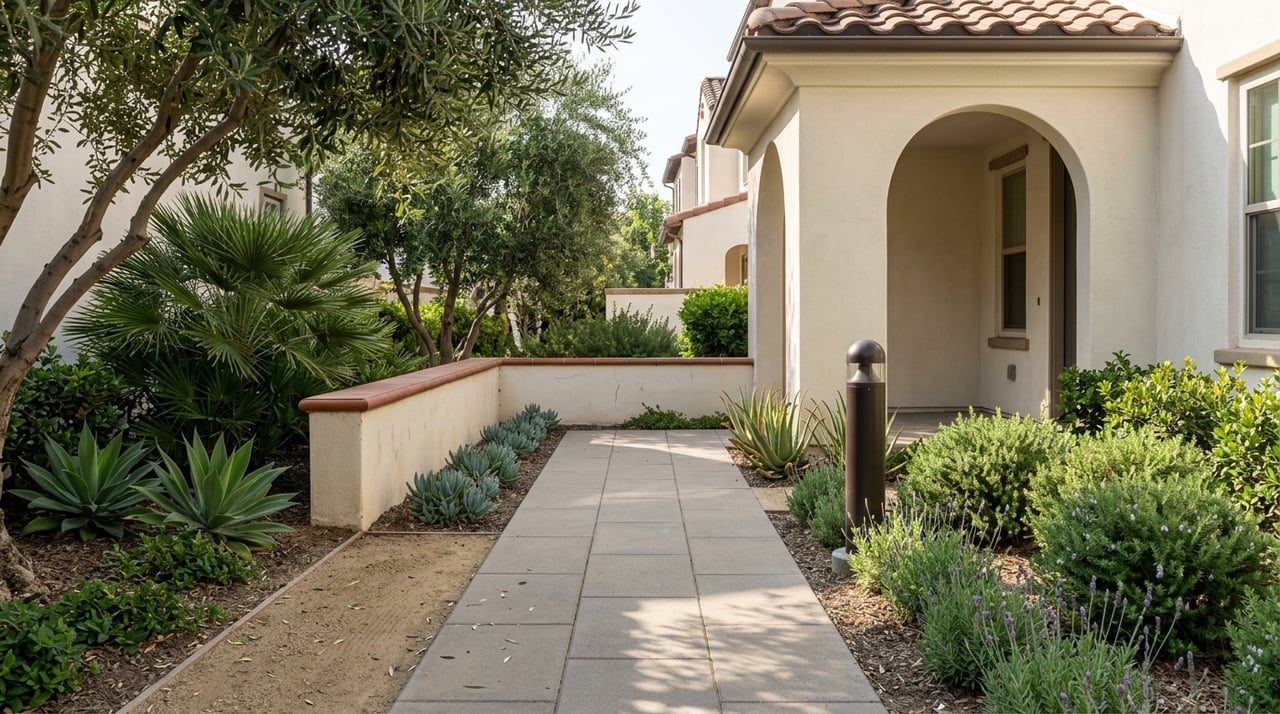
If you enjoy the polished look of Ladera Ranch, a big part of that comes from ongoing maintenance. LARMAC contracts for landscaping services and also oversees fuel-modification zones required by the Orange County Fire Authority.
That matters because landscape maintenance here is not limited to a few entry monuments or park strips. It supports a broad network of green space, planted areas, trails, and community edges that shape everyday life and curb appeal.
Pools, parks, and recreation areas
LARMAC also maintains a long list of amenities used throughout the community. Its facilities information includes 7 plunge pools, 5 clubhouse pools, 1 water park, 4 splash pads, 2 wader pools, and 1 spa.
Beyond water amenities, LARMAC reports maintaining 26 playgrounds and parks, 4 reservable clubhouses or outdoor spaces, 6 tennis courts, 2 pickleball courts, 1 basketball court, 2 sand volleyball courts, and 1 sports park. For many buyers, this is a major part of the value equation.
Private streets and daily operations
The association’s scope also includes more than 3,000,000 square feet of private streets. That is an important detail because private infrastructure still needs routine upkeep, budgeting, and long-term planning.
Day-to-day operations are another major part of what assessments support. LARMAC says it has 16 janitors and 3 maintenance technicians dedicated to keeping facilities safe, clean, and usable, along with 24/7 private patrol service on LARMAC-owned property.
Reserve funding matters too
Not every assessment dollar goes to visible, everyday services. LARMAC says the board reviews recurring contract costs, inflation, utility usage and rates, insurance, and reserve contributions when setting the budget.
In one 2024-2025 master budget packet, the disclosed average regular assessment per ownership interest was $225 per month. That figure helps show how budget planning separates current operating needs from reserve funding for longer-term maintenance obligations.
Why the total cost can vary by property
Two homes in Ladera Ranch may have very different monthly ownership costs, even if their sale prices are similar. That is because one home may have only the master assessment, while another may also have an SBA charge, sub-association dues, or special taxes.
This is especially important for condo and townhome buyers. LARMAC notes there are 17 sub-associations in Ladera Ranch, which means some properties carry an extra layer of dues tied to that neighborhood or product type.
A simple way to budget more accurately
Before you decide whether a home feels affordable, add together all of the likely housing costs:
- Mortgage payment
- Property taxes
- Homeowners insurance
- Master HOA assessment
- Any Special Benefit Area assessment
- Any sub-association dues
- Any Mello-Roos or other special tax
This approach gives you a clearer monthly picture than looking at the list price alone. It can also help you compare homes more fairly across different neighborhoods within Ladera Ranch.
The tradeoff: cost, access, and community standards
HOA living is not only about amenities and maintenance. It also comes with rules, oversight, and enforcement.
According to the community guidelines, hearings, fines, reimbursement assessments, and suspension of membership privileges can be used for repeated violations or delinquent assessments. In plain terms, the cost and the level of community control are part of the same package.
For some buyers, that structure feels worthwhile because it supports maintenance consistency and shared amenity access. For others, the rules may feel restrictive, so it is important to understand both sides before you buy.
Not every use is included in regular dues
Even in a well-amenitized community, some uses may involve extra charges. Community materials note that clubhouse reservations, picnic-area reservations, and some special uses can carry separate rental fees, deposits, and rules.
LARMAC’s fee schedule also lists charges for some architectural reviews, garden plots, and fines. That is another reason it helps to read the parcel-specific documents instead of assuming your monthly dues cover everything.
How to think about the value over time
The best way to judge HOA value in Ladera Ranch is not by the monthly number alone. It is by what that number buys you and how often you expect to benefit from it.
If you plan to use trails, parks, pools, sports areas, and clubhouses regularly, the value may feel more tangible in daily life. If you place a high priority on maintained common areas, private-street upkeep, and a structured maintenance system, that may also strengthen the case for the cost.
There is also a long-term budgeting angle. LARMAC’s own budget language highlights reserve contributions, inflation, insurance, and recurring operating costs, which supports the idea that ongoing planning can help reduce the chances of deferred maintenance.
For sellers, that broader maintenance story can matter too. Buyers often want clarity around what dues support, what the community maintains, and how the shared spaces are cared for over time.
What buyers and sellers should verify
Because HOA-related costs in Ladera Ranch can be layered, the safest move is to verify the exact numbers for the specific property you are considering. General community averages can be helpful, but they are not enough for a final budget.
The most reliable items to review are the parcel-specific budget packet, the community guidelines, the fee and fine schedule, and the Orange County property tax bill for any special assessments. LARMAC also notes that annual rates are updated through the board budget process, so current figures matter.
If you are buying, this review helps you avoid underestimating your true monthly payment. If you are selling, understanding the fee structure can help you explain ownership costs more clearly to buyers and reduce friction during escrow.
When you want clear guidance on how a specific Ladera Ranch property’s fees stack up, working with a team that knows the community’s neighborhoods, product types, and ownership costs can make the process much smoother. Connect with Ladera Realty for local insight that helps you budget, compare homes, and move forward with confidence.
FAQs
Is there just one HOA fee in Ladera Ranch?
- No. A property may have a master LARMAC assessment, and some homes also have a Special Benefit Area charge, sub-association dues, or Mello-Roos and other special taxes.
What do Ladera Ranch HOA dues usually include?
- HOA-related assessments commonly support landscape care, trails, parks, pools, clubhouses, sports facilities, private-street maintenance, patrol, janitorial work, maintenance staff, and reserve funding.
Does Ladera Ranch have separate fees at closing?
- It can. LARCS is funded primarily through a Community Enhancement Fee tied to first-time sales and resales, so it may affect closing costs rather than your monthly dues.
Can HOA rules be enforced in Ladera Ranch?
- Yes. Community guidelines allow hearings, fines, reimbursement assessments, and suspension of membership privileges for repeated violations or delinquent assessments.
Where should buyers verify exact Ladera Ranch HOA costs?
- Buyers should verify parcel-specific costs through the budget packet, community guidelines, fee and fine schedule, and the Orange County property tax bill for any special assessment charges.