Trying to decide between a condo, townhome, or single-family house in Ladera Ranch? You are not alone. Each option offers a different balance of space, monthly costs, and maintenance. The right choice comes down to how you live, what you want to spend each month, and how you see your needs changing over time. This guide breaks down what to expect in Ladera Ranch, including HOA structures, Mello-Roos, and resale signals, so you can choose with confidence. Let’s dive in.
Ladera Ranch at a glance
Ladera Ranch is a 4,000-acre, master-planned community in South Orange County with multiple villages, miles of trails, pools, clubhouses, and neighborhood parks. The village structure matters because location and amenities can influence value over time. You can read an overview of the community’s design and villages on the Ladera Ranch page on Wikipedia.
The master maintenance association, LARMAC, manages community assets like landscaping, pools, clubhouses, trails, and common areas. A separate organization, LARCS, runs community events and programs. Membership in LARMAC is automatic for homeowners within the community, and rules and standards are set in the CC&Rs and aesthetic guidelines. For a clear description of roles and responsibilities, review the LARMAC Welcome Kit.
Market-wise, Ladera Ranch sits in the low-to-mid seven-figure range overall. According to Redfin’s January 2026 snapshot, the median sale price was about $1.22 million, with the area described as somewhat competitive and homes often selling in a few months. Values vary by village, and premium pockets like Covenant Hills are known to command higher prices.
The community skews owner-occupied and family-oriented, with a relatively high median household income. The U.S. Census QuickFacts reports an estimated median household income of about $184,000 and an average commute of roughly 28 minutes for residents. See the Census QuickFacts page for context. Ladera Ranch is served primarily by Capistrano Unified School District, including Ladera Ranch Elementary and Ladera Ranch Middle inside the community. You can view district schools on the Capistrano Unified site.
Condos vs townhomes vs houses
Condos
What to expect: Condos in Ladera Ranch are attached units, often stacked or in low-rise buildings within village neighborhoods. Two-bedroom units commonly run around 1,000 to 1,300 square feet, with newer product sometimes larger. Many sit near pools, parks, or clubhouses.
Pros
- Lower maintenance. Exterior, roof, and common areas are typically handled by the building association, which can be ideal if you want minimal upkeep. See LARMAC’s role in community standards and amenities in the Welcome Kit.
- Lower entry price than many detached homes in the same community, making condos a common entry point to Ladera Ranch.
Tradeoffs
- Higher monthly HOA dues that usually cover the building exterior, common systems, and some shared services. In recent MLS samples, condo HOA dues were commonly in the mid-$400s per month and can be higher. Always confirm what the HOA covers, including any bulk internet or cable.
- A narrower resale audience compared with detached homes. Condos often appeal to first-time buyers and downsizers, and values can be more sensitive to HOA increases and rental rules.
Good to know: Compare recent sales within the same village and review HOA reserve health. Attached product can track HOA policy and reserve strength more tightly than detached homes.
Townhomes
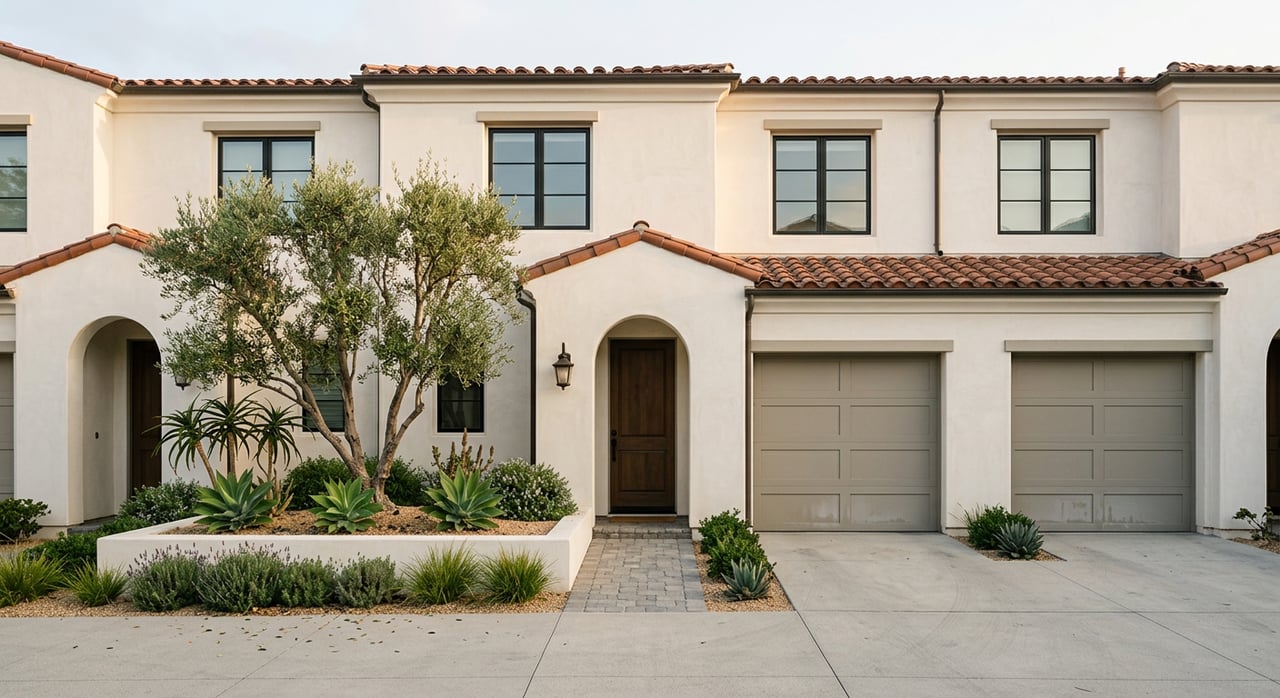
What to expect: Townhomes are attached, multi-level units that often live like a house, typically with a private garage and sometimes a small patio or courtyard. Many range from about 1,300 to 2,100 square feet.
Pros
- More space than many condos, often with a direct-access garage. These homes balance private living with lower exterior upkeep.
- Shared area maintenance and amenity access remain part of the package.
Tradeoffs
- HOA dues are often higher than detached homes’ master assessments because a sub-association may fund building insurance, roof, and structure reserves. Recent samples showed mid-$400s to $700+ per month for townhomes, plus the master assessment.
- Architectural controls and CC&Rs still apply. LARMAC enforces community standards, including the aesthetic review process. See the Welcome Kit for an overview.
Resale note: Townhomes often appeal to move-up buyers who want room without yard work. Value can still be sensitive to HOA dues and rental policies.
Single-family detached homes
What to expect: Detached homes on private lots are common across Ladera Ranch villages. Many popular plans range from about 1,800 to 2,800 square feet, though you will find smaller and larger options. Detached homes often show only the master assessment on listings, which is typically in the low hundreds per month.
Pros
- Private outdoor space and more flexibility for interior and exterior updates, subject to CC&R review. Many buyers value having a yard and proximity to parks and schools. See district context on Capistrano Unified.
- Lower ongoing association costs when only the master assessment applies, since building structure is not part of a sub-association.
Tradeoffs
- You are usually responsible for your lot, roof, house exterior, and private landscape. Some pockets have separate landscape programs, so always check if a sub-association applies. The Welcome Kit explains LARMAC’s responsibilities and the architectural review process.
Resale note: Detached homes generally draw the widest buyer pool in family-oriented master plans. Premium villages, unique lots, and proximity to community amenities can support stronger appreciation over time.
HOAs, LARMAC, and Mello-Roos
How LARMAC and sub-associations work
- LARMAC is the master maintenance association. It maintains community amenities and enforces the CC&Rs and aesthetic standards that shape neighborhood appearance and care. Membership is automatic for homeowners. Review the LARMAC Welcome Kit to see what the master assessment covers.
- Many condos and townhomes also belong to a sub-association that handles building-level items such as roof, paint, and building insurance. That sub-association fee is in addition to the master assessment. Listings may show two separate fee lines, one for the master and one for the sub-association.
- Detached homes often pay only the master assessment, which is typically lower than attached product dues. Exceptions exist, so verify every listing’s fee schedule.
Bottom line: When comparing options, add master assessment plus any sub-association dues to get the true HOA cost.
Mello-Roos: what to know
Parts of Ladera Ranch are in Community Facilities Districts that levy parcel-specific special taxes, commonly called Mello-Roos. These taxes fund infrastructure and bond debt and appear as separate lines on the property tax bill. The County of Orange lists multiple Ladera Ranch CFDs and publishes annual reports with levy and bond details. See the County’s Local Accountability Report for current context: County of Orange CFO report.
How to verify your parcel
- Ask the seller for the last two to three years of property tax bills to see the CFD line item and amount.
- Check the preliminary title report and seller disclosures.
- Cross-reference the County’s CFD report or official statements to understand the district and bond status. The County CFO report is a good primary resource.
Why it matters: Lenders count Mello-Roos as part of your monthly housing expense (converted to a monthly figure), which can affect qualification and cash flow.
Budget checklist for buyers
Use this quick list before writing an offer:
- Add up your full monthly housing cost: mortgage principal and interest, property tax, homeowners insurance, LARMAC master assessment, any sub-association HOA dues, and your monthly Mello-Roos amount. The County CFO report explains how special taxes work at the district level.
- Request the complete HOA packet for both the master and any sub-association. Review the current budget, reserve study, 12 months of meeting minutes, CC&Rs, rules on rentals and pets, parking policies, and the insurance summary. Start with the LARMAC Welcome Kit to understand master-level coverage.
- Confirm whether the sub-association covers structure, roof, painting, and building insurance. This significantly affects your maintenance obligations and long-term reserves.
- Verify rental policies if you might rent in the future. Look for any owner-occupancy period, cap percentages, or registration steps in the CC&Rs.
- Ask about any special assessments, recent reserve actions, or common-area repairs that could impact dues. Meeting minutes and reserve studies are your best signals.
Tip: HOA and special tax amounts are parcel-specific. Always verify the current numbers in escrow documents and property tax bills before making assumptions.
Resale patterns in Ladera Ranch
- Detached homes typically command the largest buyer pool in Ladera Ranch. Yards, privacy, and flexible floor plans can support stronger demand over time.
- Village context matters. Locations near parks, trails, and schools often see steady interest. Premium gated areas like Covenant Hills tend to trade at a noticeable premium.
- For attached homes, HOA health and rules matter. Reserves, insurance coverage, rental policies, and recent assessment history can influence pricing and buyer confidence.
If your horizon is short, consider liquidity. If you plan to stay long term, weigh maintenance and monthly costs heavily and choose the plan and village that best match your daily routines.
Which one fits your life
- You want the lowest maintenance: A condo may be the best fit since the association typically handles the building exterior and common areas. Townhomes can be close, depending on what the sub-association covers.
- You want more space without yard work: Consider a townhome. You will likely get a garage, multiple levels, and limited exterior obligations.
- You want a yard and the broadest resale audience: Look at detached homes. Expect a lower master assessment compared with many attached dues, but budget for private exterior and landscape maintenance.
- You care about commute flexibility: Ladera Ranch residents report an average commute of about 28 minutes, and many drives to Irvine or Anaheim fall in the 20 to 40 minute range depending on timing and route. See Census QuickFacts for the commute estimate.
- Schools and amenities are a priority: Ladera Ranch is served by Capistrano Unified, with elementary and middle schools inside the community, and a network of parks, trails, and clubhouses. Visit Capistrano Unified for the current school list and the LARMAC Welcome Kit for community amenities.
Ready to map these choices to your daily life, budget, and timeline? Our team has lived and worked in Ladera Ranch since the community’s early days. We can help you compare villages, floor plans, HOA structures, and long-term resale considerations so you buy with clarity. Connect with the local experts at Ladera Realty to get started.
FAQs
Do condos or townhomes in Ladera Ranch usually have higher monthly fees than detached homes?
- Often yes. Attached homes typically pay both the master assessment and a sub-association that funds structure, roof, and building insurance, while many detached homes pay only the master assessment. Always add master plus sub fees when comparing costs.
How do Mello-Roos special taxes affect my monthly budget and loan qualification in Ladera Ranch?
- Lenders include the annual special tax amount in your housing costs by converting it to a monthly figure, which can reduce qualifying capacity. Verify the parcel’s special tax on recent property tax bills and review the County’s CFD report.
If I want the lowest maintenance lifestyle, what should I buy in Ladera Ranch?
- Condos usually offer the lowest private maintenance burden because the association manages the building exterior and common areas. Townhomes are similar but may include a few more owner obligations. Detached homes require the most private exterior care.
What does LARMAC cover for Ladera Ranch homeowners?
- LARMAC is the master maintenance association that manages community landscaping, pools, clubhouses, trails, and enforces CC&Rs and aesthetic standards. Review the LARMAC Welcome Kit for details on funding and scope.
What should I review in the HOA packet before buying a Ladera Ranch home?
- At minimum, review the master and any sub-association budgets, reserve studies, the last 12 months of minutes, CC&Rs, rental and pet rules, parking policies, the insurance summary, and any special assessments. These documents reveal costs, rules, and upcoming projects.